Mapping User Progression from Initial Access Points to Incentive Redemption in Chance-Based Digital Entertainment
Written by Willa Schmitt · Jun 20, 2026
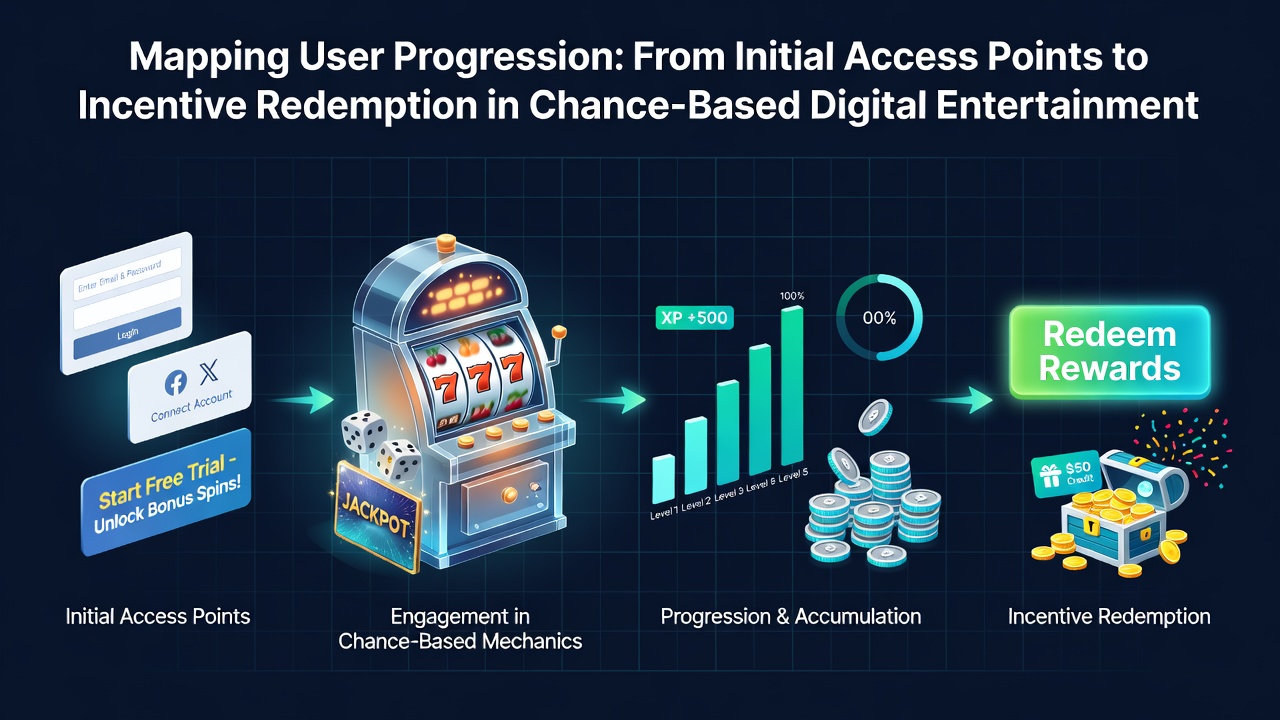
Mapping User Progression from Initial Access Points to Incentive Redemption in Chance-Based Digital Entertainment
Chance-based digital entertainment platforms organize user activity into structured sequences that begin at entry points and conclude at incentive redemption stages, with each segment tracked through backend logging systems and compliance protocols. These sequences incorporate authentication checks, game interaction logs, and transaction records that regulatory frameworks require operators to maintain across multiple jurisdictions.
Initial access typically starts with account creation where users submit identification details verified against government databases or third-party services, and studies from the Alcohol and Gaming Commission of Ontario show verification completion rates averaging 87 percent within the first session when automated tools handle document uploads. Once approved, users encounter welcome incentives that activate upon deposit confirmation, creating the first measurable milestone in progression tracking.
Entry Mechanisms and Verification Layers
Platforms route new users through standardized onboarding that includes email confirmation, phone validation, and sometimes biometric elements such as facial recognition during high-value account setups. Data collected at this stage feeds into risk-scoring algorithms that determine subsequent incentive eligibility, and observers note that these systems update in real time as users complete profile fields.
Geolocation services further refine access by confirming user location against licensed operating regions, while session cookies record device fingerprints to detect multi-account attempts. Industry reports indicate that such layered checks reduce fraudulent redemptions by measurable percentages when integrated with payment gateways from the outset.
Progression Through Gameplay and Bonus Accumulation
After entry, users move into game environments where spin counts, bet sizes, and win/loss ratios populate user profiles that influence bonus triggers. Chance-based titles log every interaction to central servers, enabling operators to map how play patterns correlate with progression toward redemption thresholds. Researchers at the University of Nevada, Reno have examined these datasets to identify common pathways that lead from initial deposits to accumulated loyalty points.
Bonus mechanics often require specific wagering multiples before conversion to withdrawable funds, and platforms display real-time counters that update after each qualifying round. Users who meet criteria receive notifications through in-app messages or email summaries, marking the transition from accumulation to potential payout phases.
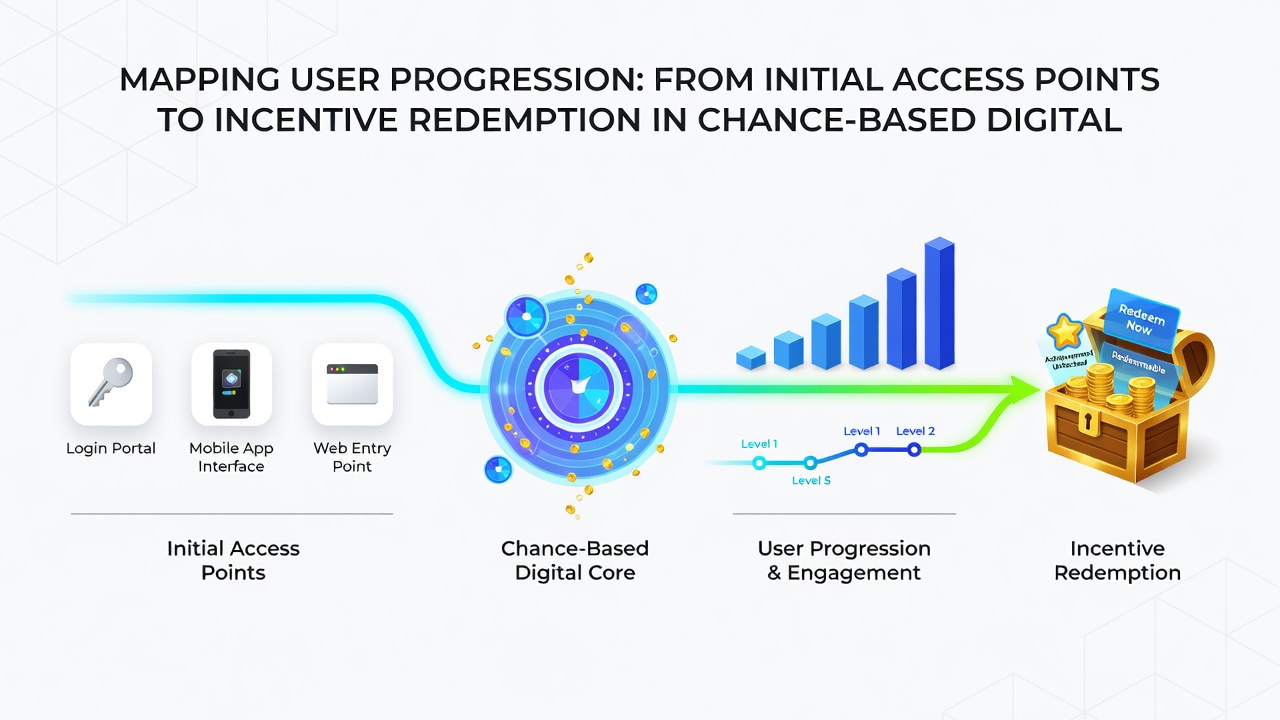
Transaction Gateways and Redemption Processes
Redemption requests route through payment processors that cross-reference account history against anti-money laundering flags before releasing funds. Processing times vary by method, with e-wallet options completing in hours while bank transfers may extend to several business days, and figures from North American operators reveal average approval windows of 24 to 72 hours for verified accounts in mid-2026.
Operators maintain audit trails that connect each redemption event back to the originating access point and subsequent gameplay sessions. These records support regulatory reporting requirements and help identify anomalies such as rapid cycling between deposit and withdrawal actions.
Integration of Analytics Across the Full Pathway
Analytics platforms aggregate timestamps from login events, game launches, bonus claims, and payout completions to generate heat maps of user flow. Such visualizations assist technical teams in spotting bottlenecks where drop-off rates increase, particularly around verification delays or unclear wagering conditions. Coordination between front-end interfaces and back-end databases ensures that incentive balances reflect accurate play history at every checkpoint.
As platforms scale operations through June 2026, updates to these mapping systems incorporate machine learning models that predict redemption likelihood based on early-session behavior patterns. Regulatory bodies in multiple regions continue to require transparent documentation of these processes to maintain licensing standards.
Conclusion
The complete mapping of user progression in chance-based digital entertainment reveals interconnected stages that rely on precise data capture from access through redemption. Operators who maintain detailed pathway records meet compliance demands while supporting smoother user experiences across global networks. Continued refinement of these systems reflects ongoing adjustments to technological capabilities and oversight expectations.