How Encryption Standards Shape Reward Delivery Times in Online Chance Games
Written by Willa Schmitt · Jun 10, 2026
How Encryption Standards Shape Reward Delivery Times in Online Chance Games
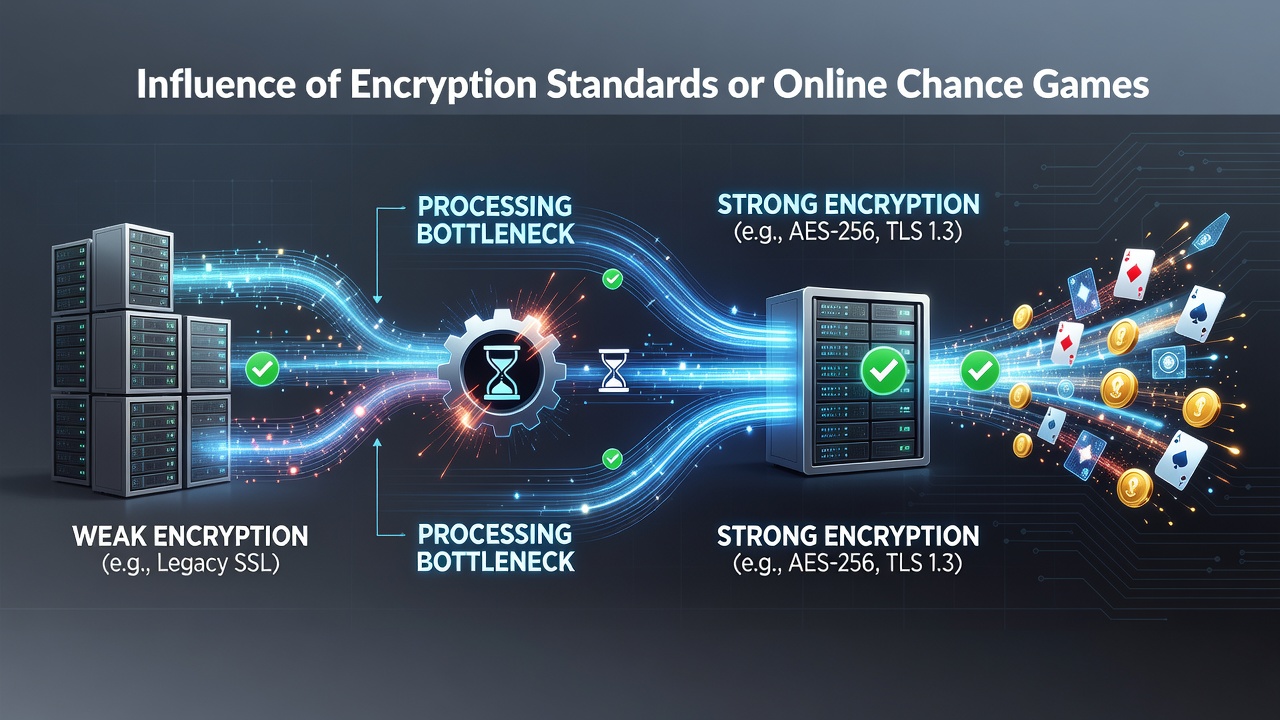
Online chance games rely on encryption protocols to protect player data and transaction integrity, yet those same protocols introduce measurable processing overhead that directly affects how quickly rewards reach accounts. Researchers tracking platform performance note that standards such as AES-256 and TLS 1.3 require additional computational steps during each payout request, steps that accumulate when thousands of simultaneous transactions occur during peak periods.
Core Encryption Mechanisms Used in Gaming Networks
Modern platforms apply symmetric encryption for bulk data and asymmetric methods for key exchange, a combination that satisfies requirements set by regulatory bodies including the Nevada Gaming Control Board and the Malta Gaming Authority. Observers note that each reward delivery cycle involves at least one full encryption and decryption round, plus certificate verification, before funds move from operator ledgers to player wallets. Data from infrastructure monitoring firms shows these operations add between 40 and 120 milliseconds per transaction under typical load, figures that scale when platforms adopt larger key sizes or post-quantum algorithms still undergoing standardization at NIST.
Platforms must balance security mandates with latency targets, and studies published in 2025 by the European Gaming and Betting Association indicate that operators using TLS 1.3 instead of 1.2 reduce handshake times by roughly 30 percent while maintaining compliance. The same reports highlight that hardware acceleration modules now common in data centers offset much of the added cost, yet smaller operators without such equipment experience longer average payout windows.
Transaction Pathways and Processing Delays
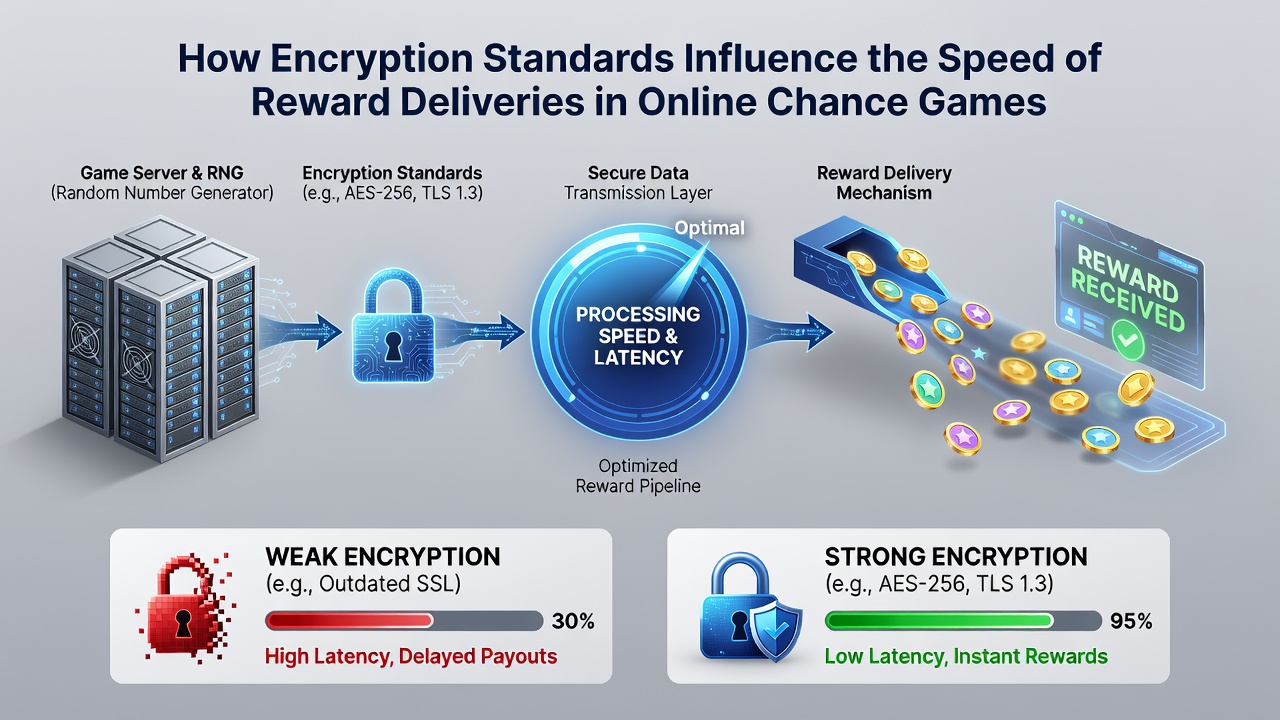
Reward delivery begins when a game server confirms a win condition, after which the system packages the payout request, encrypts it, routes it through payment gateways, and logs the result in immutable audit trails. Each hop applies its own encryption layer, creating cumulative latency that becomes noticeable during high-volume events such as progressive jackpot hits. According to transaction logs analyzed by researchers at the University of Nevada, Reno, peak-hour reward queues lengthen when encryption queues exceed available CPU cores, an issue documented in June 2026 after several major platforms reported temporary slowdowns following regulatory stress tests.
Impact of Key Size and Algorithm Choice
Operators selecting 256-bit keys over 128-bit variants gain stronger resistance against brute-force attempts, yet benchmarks released by the Canadian Gaming Association demonstrate a consistent 15 to 25 percent increase in processing time per payout request. Post-quantum candidates currently under NIST review promise future-proof security, but early implementations tested by Australian wagering platforms reveal additional overhead that extends average reward delivery from 1.8 seconds to 3.4 seconds on standard server configurations.
Regulatory Timelines and Platform Adaptations
June 2026 saw several jurisdictions update encryption minimums, prompting operators to migrate systems during scheduled maintenance windows. Those who completed upgrades ahead of deadlines maintained faster reward cycles because they integrated optimized libraries that reduced redundant encryption calls. In contrast, platforms handling last-minute patches recorded temporary spikes in payout latency exceeding 200 milliseconds per transaction, according to aggregated telemetry shared by industry monitoring consortia.
Payment processors also enforce their own encryption requirements, and coordination between gaming operators and these processors determines final delivery speed. Data compiled by the Asia-Pacific Gaming Council reveals that regions with unified encryption guidelines experience more consistent reward times than markets where operators must satisfy multiple overlapping standards simultaneously.
Hardware and Software Optimization Trends
Specialized cryptographic accelerators now appear in most Tier-1 data centers supporting online chance games, allowing parallel processing of encryption tasks without blocking the main transaction thread. Software-level improvements, including session resumption and 0-RTT handshakes introduced in TLS 1.3, further trim repeated verification costs for returning players. Research teams monitoring these implementations report that reward delivery variance drops significantly once platforms enable these features across all user cohorts.
Smaller operators continue to rely on general-purpose servers, where encryption competes directly with game logic for processor cycles. This competition produces measurable differences in average payout speed, differences documented in quarterly performance reports issued by multiple regional gaming authorities.
Conclusion
Encryption standards remain essential for securing reward pathways in online chance games, yet their computational demands create quantifiable effects on delivery speed. Platform operators that adopt newer protocols alongside hardware acceleration achieve faster average payout times while satisfying regulatory mandates. Continued refinement of both standards and infrastructure will determine how these performance characteristics evolve in coming years.