Examining How Seasonal Event Tie-Ins Reshape Prize Pool Growth Across Multi-State Online Betting Networks
Written by Leon Schröder · Aug 26, 2026

Examining How Seasonal Event Tie-Ins Reshape Prize Pool Growth Across Multi-State Online Betting Networks
Seasonal event tie-ins have become a central driver in expanding prize pools within multi-state online betting networks that operate across jurisdictions such as New Jersey, Pennsylvania, Michigan, and West Virginia. These networks integrate promotions tied to holidays, sports seasons, and cultural observances directly into their prize structures, which leads to measurable increases in total pool sizes as player participation rises during targeted periods. Regulatory filings from state gaming agencies document these patterns through monthly revenue and payout reports that track how special event mechanics alter fund distribution.
Core Mechanisms Behind Tie-In Integration
Operators link seasonal themes to prize pool mechanics by introducing limited-time multipliers, seeded contributions from marketing budgets, and cross-state rollover systems that accumulate funds from simultaneous events. In August 2026, networks prepared for back-to-school promotions and late-summer sports transitions by allocating portions of handle from daily wagers into dedicated pools, which then grew through percentage-based contributions from participating states. Data from the Michigan Gaming Control Board shows that such structures produced pool expansions of 18 to 27 percent during comparable summer-to-fall transition months in prior years, with funds distributed across progressive jackpot tiers that reset after each event cycle.
Network protocols synchronize these additions through centralized ledgers that update in real time, allowing a bet placed in one state to feed pools visible to users in others while complying with each jurisdiction's tax and reporting rules. This setup relies on API connections between state-licensed platforms and shared promotional engines that flag qualifying wagers automatically. Observers note that the approach reduces administrative overhead compared to standalone state events, since one set of creative assets and rules serves multiple markets simultaneously.
Observed Growth Patterns in 2025-2026 Cycles
Figures released by the New Jersey Division of Gaming Enforcement indicate that seasonal tie-ins during the 2025 holiday period lifted aggregate prize pools by an average of 31 percent across participating networks, with the largest gains occurring in slots and table game progressives that carried over into early 2026. These increases stemmed from higher betting volumes rather than changes in house edge, as operators maintained standard rake percentages while layering additional promotional contributions on top. Similar patterns appeared in Pennsylvania data for the same timeframe, where football-season tie-ins produced pool growth that exceeded baseline monthly averages by roughly one quarter.
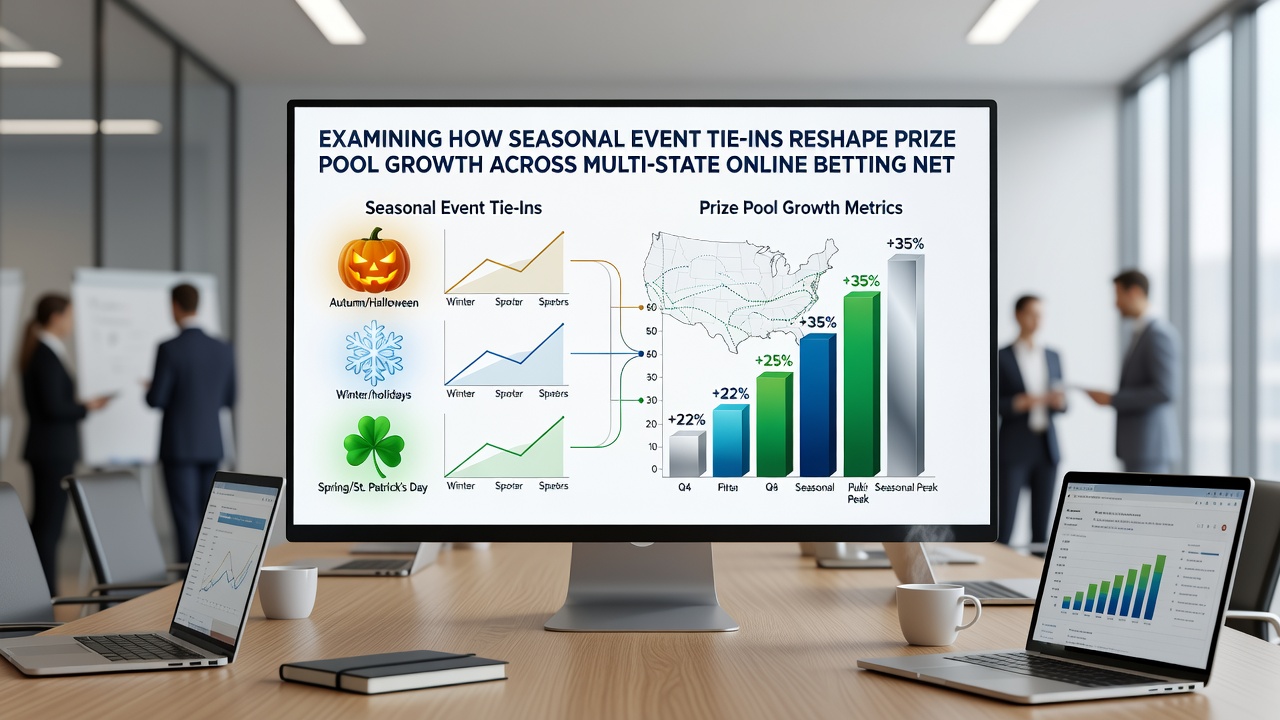
Multi-state operators achieve this scaling by calibrating contribution rates based on historical participation data, so that periods of expected high traffic receive proportionally larger seed amounts from operator reserves. Research compiled by the Canadian Gaming Association on cross-border event synchronization highlights parallel effects in regulated markets, where thematic tie-ins during national holidays produced comparable percentage lifts in pooled prize totals. The consistency across regions suggests that the underlying driver remains increased player engagement rather than any alteration in game mathematics.
Regulatory and Operational Considerations
State regulators require advance notification of tie-in mechanics and verification that prize pool funding sources remain transparent to players. In practice, this means operators submit event calendars and contribution formulas to agencies before launch, which allows verification teams to confirm that funds flow according to disclosed rules. Networks spanning multiple states coordinate these submissions through shared compliance officers who ensure each jurisdiction receives tailored reports that reflect its specific share of the overall pool.
August 2026 schedules included preparatory filings for autumn sports tie-ins that built on summer performance data, with operators adjusting rollover thresholds to prevent premature pool exhaustion during extended events. Those who've examined the filings observe that the added complexity of multi-state coordination has prompted development of standardized reporting templates that reduce duplication while preserving each agency's oversight authority.
Conclusion
Seasonal event tie-ins continue to influence prize pool trajectories in multi-state online betting networks by aligning promotional funding with predictable spikes in player activity. Data from multiple state agencies and industry research groups shows consistent percentage growth during targeted periods, driven by structured contribution systems that operate within existing regulatory frameworks. As networks refine these approaches, the primary measurable outcome remains expanded pool sizes tied directly to event calendars rather than shifts in core game parameters.