Analyzing Biometric Verification Trends Transforming Access Points in Remote Betting Systems
Written by Rosa Frank · May 23, 2026

Analyzing Biometric Verification Trends Transforming Access Points in Remote Betting Systems
Biometric verification has moved from experimental pilots to standard practice across remote betting platforms, and data collected through the first quarter of 2026 shows continued acceleration in adoption rates. Operators integrate facial recognition, fingerprint matching, and voice analysis at login points, deposit stages, and withdrawal requests to meet stricter identity requirements while reducing friction for verified users. Figures released by the American Gaming Association in April 2026 indicate that over 68 percent of licensed online operators in regulated U.S. markets now deploy at least one biometric method at primary access points.
Technology Shifts Observed in Early 2026
Platforms have shifted away from single-factor passwords toward multi-modal systems that combine two or more biometric traits, and this change stems from both security incidents reported in 2024 and updated technical standards issued by state regulators. Facial recognition paired with liveness detection now handles initial account creation in many jurisdictions, while fingerprint or palm-vein scans manage session re-authentication on mobile devices. Research published by the University of Nevada, Reno gaming laboratory in March 2026 documented a 41 percent drop in account takeover attempts on sites that introduced liveness-checked facial systems the previous year.
Voice biometrics appear most frequently during customer support calls and high-value transaction approvals, because the method requires no additional hardware beyond the microphone already present in smartphones and computers. Operators in Australia report similar patterns, where the Australian Communications and Media Authority noted in its February 2026 compliance review that voiceprint enrollment rates rose 29 percent year-over-year among licensed wagering providers.
Effects on Access Points and Player Flow
Access points have changed from simple username-and-password gates to layered checkpoints that activate at different transaction values and risk levels. Low-stake bets often require only an initial biometric match at login, whereas deposits above certain thresholds trigger a second verification step, and withdrawal requests above AUD 5,000 in Australia or USD 3,000 in several U.S. states now mandate fresh biometric confirmation. This tiered approach emerged after regulatory updates in late 2025, and operators state that average session completion times have remained stable despite added checks because biometric matches complete in under two seconds on modern devices.
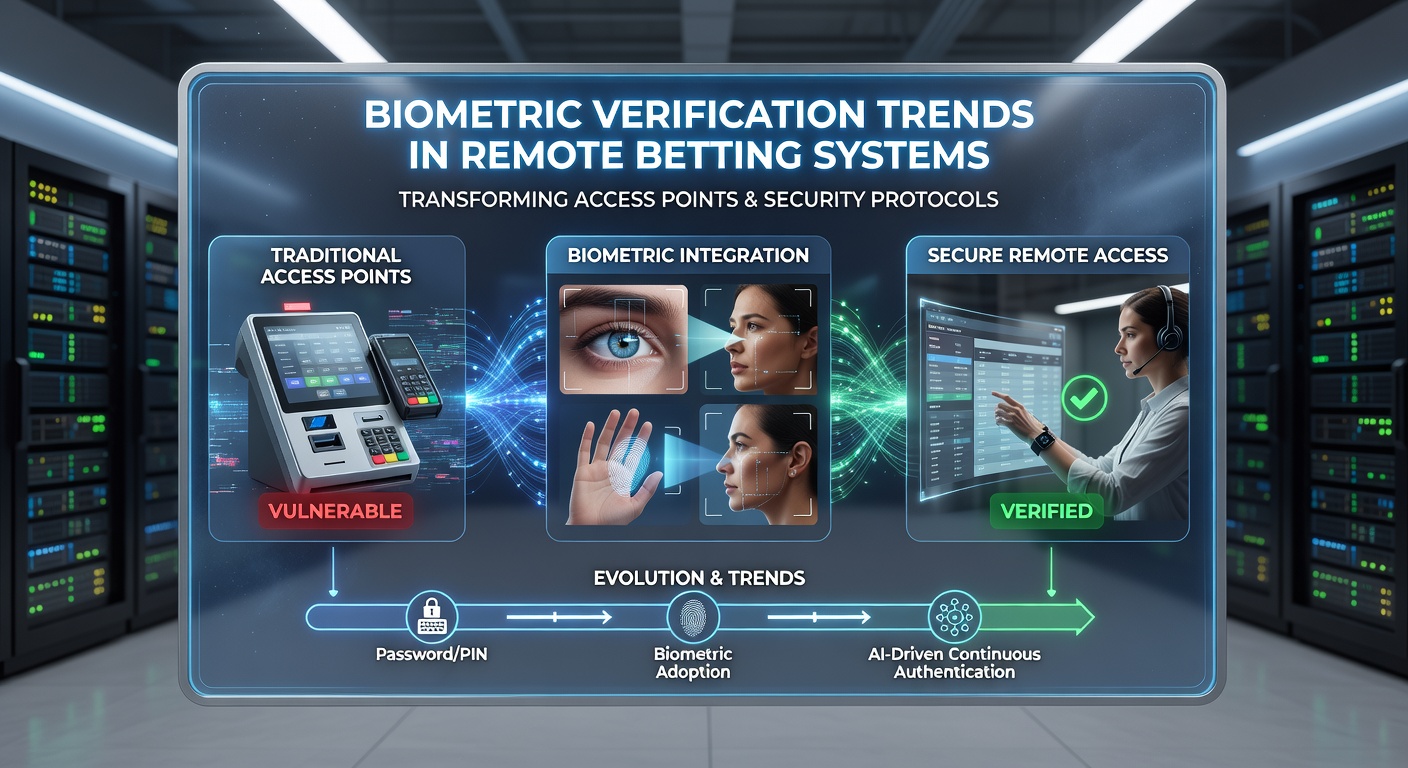
Backend systems now store encrypted biometric templates rather than raw images or recordings, and this storage method aligns with data protection rules enforced by the Malta Gaming Authority and several Canadian provincial regulators. When a template mismatch occurs, the platform routes the user to an alternative verification path that includes government-issued ID upload combined with manual review, a process that industry reports show resolves within four hours in 92 percent of cases.
Regulatory and Standards Updates Through May 2026
State and national regulators have issued new guidance documents that explicitly reference biometric performance metrics such as false acceptance rates below 0.01 percent and false rejection rates below 2 percent. The Nevada Gaming Control Board incorporated these benchmarks into its May 2026 technical circular, requiring all new remote betting license applicants to demonstrate compliance through third-party testing before launch. Similar language appears in draft rules circulated by the Alcohol and Gaming Commission of Ontario, which plans to finalize requirements by September 2026.
International standards bodies have also contributed updated frameworks, and the European Committee for Standardization released a technical specification in January 2026 covering biometric data interchange formats tailored to gambling applications. Operators that align early with these specifications gain streamlined approval processes in multiple European markets, while those relying on older single-factor systems face extended review periods.
Implementation Patterns Across Regions
North American markets show heavier investment in fingerprint and facial systems because most players access platforms through smartphones that already contain the necessary sensors. European operators, constrained by stricter data localization rules, more often deploy on-device processing that keeps biometric templates stored locally rather than transmitting them to central servers. Australian providers have emphasized voice biometrics because many users place bets via telephone betting services alongside app-based play, creating a natural integration point for voiceprint matching.
One study released by the University of Sydney in April 2026 examined transaction logs from three major operators and found that biometric checkpoints reduced manual identity reviews by 73 percent while maintaining the same level of fraud detection previously achieved through document verification alone. The same dataset revealed that player drop-off at the deposit stage decreased by 11 percent after biometric prompts replaced repeated password entries.
Conclusion
Biometric verification continues to reshape how remote betting platforms manage identity at every access point, and the patterns observed through May 2026 point toward wider deployment of multi-modal systems that balance security requirements with user convenience. Regulatory bodies across North America, Europe, and Australia have aligned technical standards around measurable performance thresholds, giving operators clearer benchmarks for implementation. As template storage methods improve and device sensors become more consistent, the infrastructure supporting these verification layers is expected to expand into additional transaction types and risk scenarios without introducing new friction for legitimate users.